
Emotional Intelligence in Leaders: A Key to Unlocking Leadership Potential
- Jim Ramos, PhD, MBA
- Jun 30
- 4 min read

Imagine a team meeting where everyone is waiting for the project leader to enter and join them. As they wait, tensions amongst the team are high due to a group awareness of a missed deadline or failed project outcome. Some of them may even be worried that they will lose their job.
Then, the leader enters the room. Aware of the project failure, they sense the unease in the room. Instead of scolding or yelling at the team they surprise everyone. THey acknowledge everyone’s effort, and steer the conversation toward solutions rather than blame. The tension in the room slowly melts away as thoughts move from resume updates to actionable solutions.
This is a glimpse into the power of emotional intelligence (EI) in leadership.
New and veteran leaders alike can benefit from exploring how emotional intelligence can profoundly shape one’s effectiveness as a leader. By understanding and cultivating EI, leaders can navigate the complexities of human dynamics with greater ease and impact, leading to stronger teams, higher productivity, and a more positive work environment.
Understanding Emotional Intelligence
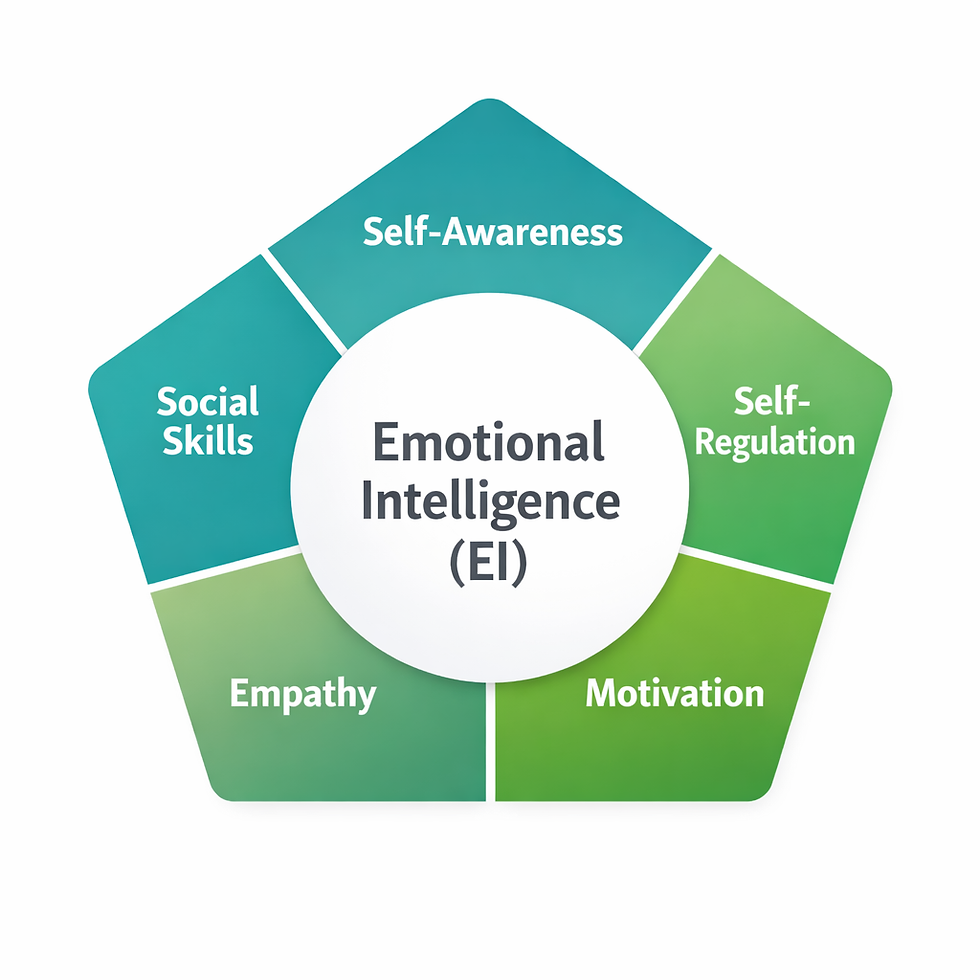
Emotional intelligence, often abbreviated as EI or EQ (emotional quotient), is the ability to recognize, understand, manage, and influence one’s own emotions. It is also the ability to recognize the emotions of others. There are several components that make up EI:
Self-Awareness: Recognizing one’s emotions and how different emotions impact their thoughts and behavior. Leaders who are self-aware can avoid emotional outbursts that may negatively impact the team. Instead they have the emotional awareness to make better informed decisions.
Self-Regulation: Recognizing one’s emotions is half the battle. It is import to also be able to regulate emotions in healthy ways, especially in stressful situations. This includes staying calm under pressure, adapting to change, and avoiding impulsive actions that may lead to poor decision-making.
Motivation: Things get tough and it is easy to quit, but using EI individuals can harness emotions to drive energy and persistence towards goal completion. Emotionally intelligent leaders exhibit resilience, enthusiasm, and a strong sense of purpose, which inspires their teams to stay committed.
Empathy: Understanding and considering others’ emotions and perspectives when it comes to decision making and the impact after. Empathetic leaders build strong relationships by recognizing the concerns and needs of their team members. This fosters a culture of mutual respect and support.
Social Skills: Building relationships and finding common ground to fostering a positive teamwork environment. Strong social skills allow leaders to manage conflict effectively, communicate persuasively, and create an environment where collaboration thrives.
Emotional intelligence can influence aspects of both personal and professional life. EI can help enhance communication, strengthen relationships, and improve decision-making skills. EI also helps to build emotional resilience which in turn improves one’s adaptability and strengthens interpersonal bonds. This is beneficial in someone’s personal life, but also crucial for effective leadership.
The Role of Emotional Intelligence in Leadership
In leadership, emotional intelligence transforms ordinary managers into inspirational leaders. Here’s how:
Improved Decision-Making: Leaders with high EI can balance emotional and rational thinking. This allows them to assess situations without clouded judgment by weighing facts, emotions, and potential outcomes before making a decision. This allows them to lead towards more thoughtful and effective leadership.
Enhanced Communication: By being attuned to the emotional climate, leaders can adjust their communication style based on their audience. This allows them to communicate more effectively to ensure their message is heard and understood. This also helps to foster openness with their team to reduce misunderstandings.
Conflict Resolution: EI allows leaders to navigate conflicts with empathy and understanding. This allows them to address the issues calmly without escalating disputes. Instead they are able to find common ground an mediate solutions that benefit all parties involved.
Team Building: By practicing EI, leaders are able to recognize and value individual team members contributions. They are able to create an inclusive work environment with supportive work ultra. This helps foster trust and collaboration to create cohesive high-performing teams where everyone feels valued and motivated.
Developing Emotional Intelligence as a Leader

Building emotional intelligence takes time and it is important to recognize it as an ongoing journey. It is worth developing EI and leaders can start with a few practical steps to build their EI. This includes:
Self-Assessment: Utilize tools like journaling to track and gauge their current level of emotional intelligence. This can include identifying he different emotional triggers and resulting reactions. Honest self-reflection helps with self-identification of strengths and areas that need improvement.
Mindfulness and Self-Reflection: Take self-assessment a step further with regular practices that enhance self-awareness and emotional regulation. This can involve techniques such as meditation, deep breathing, and mindfulness exercises to not only identify emotional triggers and the reaction, but the consequence of the reactions as well. This can help leaders remain composed and aware of their emotional triggers and potential negative consequences.
Active Listening and Empathy: Cultivating empathy by genuinely listening to team members, creating an environment of mutual respect. Active listening involves giving full attention to the speaker, asking clarifying questions, and responding thoughtfully rather than reactively.
Emotional Regulation: Practicing techniques like deep breathing or reframing to maintain emotional control after an emotional trigger is important to develop emotional regulation. This does not mean turning off your emotions, but understanding how they are impacting your actions. Leaders who are able to regulate their emotions effectively prevent stress from impairing their judgment and can approach challenges with a clear mind.
Continuous Learning and Feedback: Commiting to personal growth is an important part of developing EI. This can be done in multiple ways such as actively seeking feedback and constructive criticism from peers and mentors, attending leadership development programs, and engaging in lifelong learning. These can all have positive impacts on refining emotional intelligence skills over time.
Conclusion
Emotional intelligence is not a soft skill, it’s a leadership superpower. By committing to developing EI, leaders can unlock their full potential and inspire others to do the same. It enables leaders to build stronger teams, navigate conflicts with grace, and create an inclusive, high-performing work environment.
Comments